
Why Nothing You Learn Ever Changes You.
The final training, and the day knowing became seeing

You can listen to the article here👆
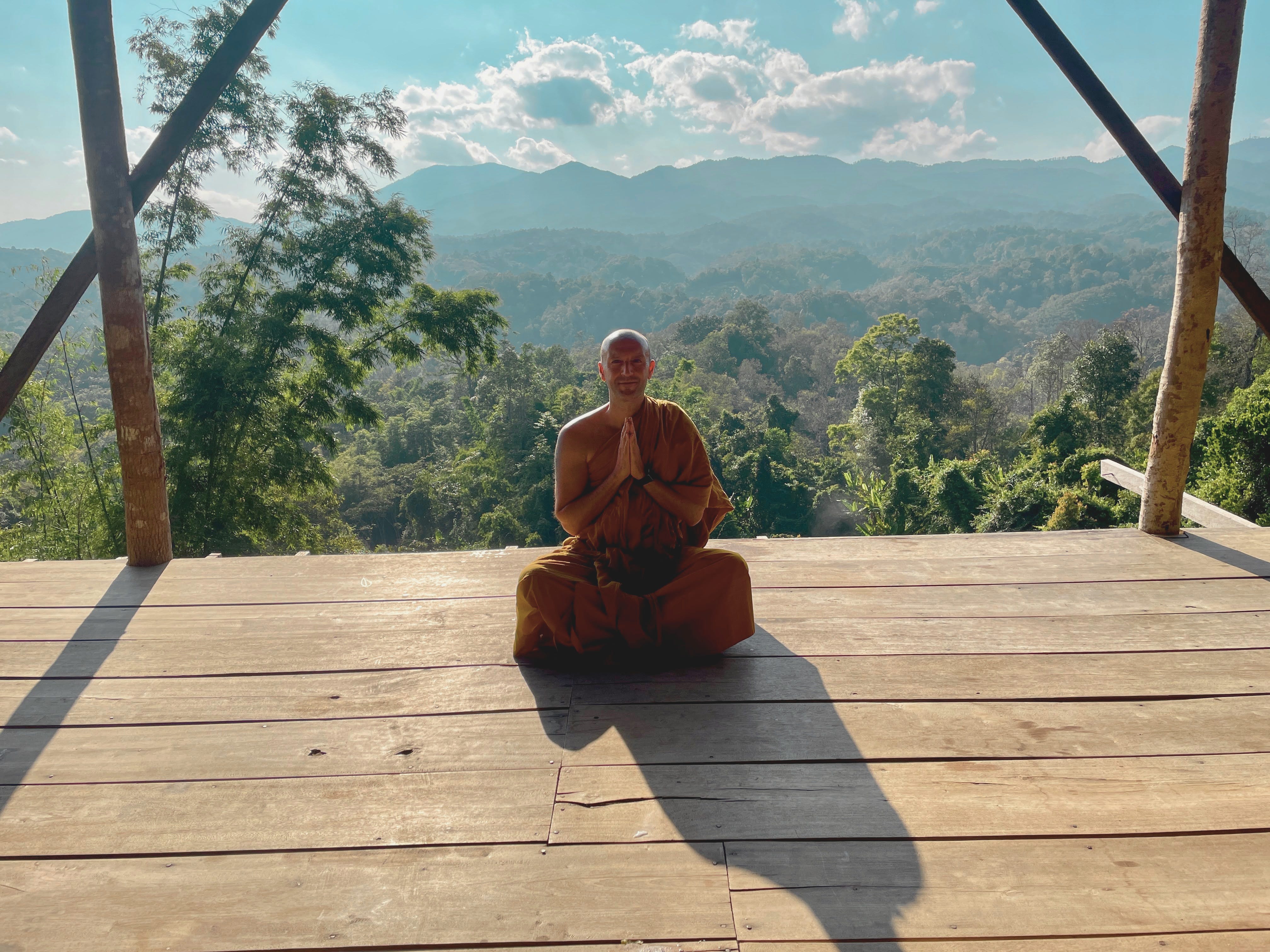
Series: The Three Trainings (Part 3 of 3)
A brief word on where we are.
Two weeks ago we walked through sīla, last week, we finished our exploration of Samādhi – the concentration that modern mindfulness quietly lost. Today, we come to the third training – the very purpose for the first two. Paññā – wisdom.
You have consumed more wisdom than any previous generations in history.
Podcasts on your commute; books on your nightstand; videos before bed. You can explain attachment, impermanence, the nervous system, and the ego. You know more about the mind than most humans throughout history.
Yet, underneath it all, you remain roughly the same person you were five years ago. You react similarly. Your patterns are similar. You wake up similarly at 3 a.m.
There is nothing wrong with you. Something is missing and that something has a name. That name is Paññā. The Buddha called it Paññā. It is the third training in the entire system we’ve been exploring over the past three weeks. It is separated from knowledge by a line so thin that nearly everyone fails to cross it. Yet, crossing that line dramatically changes a person’s life.
What Paññā means
Paññā is typically translated as “wisdom.” However, this translation has misled people for decades.
To westerners, wisdom means refined knowledge. Better quotes; better concepts. An elderly sage sitting on top of a mountain having read everything and condensed it down. Therefore, we seek wisdom using the same methods we use to acquire knowledge: we gather more, we learn more, we add another book to our collection.
Paññā is something completely different. Paññā means seeing directly into how experiences occur in real-time within your own mind. It is what Vipassana is designed to elicit. Paññā cannot be given to you through words. The Buddha could accurately describe what he saw for forty-five years. He could never cause anyone to see it. Nor can any teacher, book, or app. Nor can i.
This is the humble structure of the path. The only thing capable of releasing us is the One thing none of us can give ourselves.
You can know a truth for years and see it once.
The seeing will do what the knowing never did.
The day i froze.
I practiced the four foundations of mindfulness numerous times under the guidance of my master. Body, feelings, mind, and mind objects comprise the four domains where awareness observes experience unfolding. He clarified how each domain relates to One another and how the entirety of experience moves through them.
I knew this stuff. I could have recited it back to him. It lived in my head alongside all the other things i’d learned.
However, then One day, during an ordinary practice session, i saw it.
A sensation developed in the body. Instantly, along with it, came a feeling tone. The mind turned towards it. A mental object emerged from this turning. One motion. Interconnected. Lawful. Moving according to its own natural rhythm. The entire process that the Buddha described to my master and that my master repeatedly conveyed to me was simply visible. Simply occurring.
I froze. I sat there amazed. Like i’d stumbled upon something enormous.
I’m keeping this small and honest, since the actual event was small. Nothing cosmic occurred. No light. No bliss. Only a process that had been visible to me.
But here’s the peculiar aspect: there wasn’t anything new in terms of content. My master had explained this identical process to me more times than i can recall. I had known it for years.
That day, knowing turned into seeing. And the seeing did what years of knowing had never accomplished: it got inside of me. Staying inside me. Quietly beginning to alter how i interacted with my own mind.
Weekly teachings to guide you from inner noise to genuine peace.
Every post is free for 30 days.
Then moves into paid archive.
Subscribe & receive a free calm audio recorded by me - yours immediately.
Why the Buddha build it in this order
For a good length of my practice, everything felt like effort to me. Pursuing stillness. Pursuing forward momentum. Pursuing whatever was the next step in practice. Practice as just One more expression of ambition.
Then, something shifted that i didn’t design or create.
As my life cleaned up and my mind concentrated, the seeing began emerging with far less struggle. Spontaneously. Without invitation. Insights would arise naturally while practicing regularly, during ordinary sits; during ordinary walks.
One day i realized something that shocked me more than any individual experience had:
I had stopped pursuing. Not as a result of a conscious choice. It had simply disappeared.
I had stopped becoming and started being.
And in that transformation, the overall framework of the entire path became apparent to me, why the Buddha put these three trainings in this particular order and never taught One without including both of the others.
Sīla cleanses the terrain. When a mind no longer disturbs itself due to its behavior, it leaves nothing hidden from itself, allowing it to settle into a place of equanimity. Samādhi collects the settled mind into One stream, quiet enough to observe closely. And Paññā is what occurs when the clean and still mind finally takes a look at its environment.
Once seeing begins occurring based on these conditions, what is revealed in seeing eliminates craving, which creates an effortless sense of ethics, which further quiets the mind, which allows for greater clarity in seeing.
Remove any of the three elements and both of the remaining ones become distorted.
Ethics alone results in moralism, a hardened attitude devoid of compassion or flexibility.
Concentration alone becomes intoxication, a major risk my master cautioned against constantly during his teachings.
Seeing (Paññā) rarely occurs without both sīla and Samādhi present. Which explains why ten years of studying books yields such minimal change in individuals’ lives, despite their study being accurate and sincere. Reading represents valid understanding of the material; however, lacking the foundational sīla and calm (Samādhi), the reading lacks impact, either short-term or long-term.
Somewhere during my practice, my master provided perhaps the clearest explanation of the third training i’ve experienced, and i haven’t required any additional definitions since then.
“Paññā is seeing clearly enough that craving loses its argument, suffering loses its hold, and the heart no longer requires life be otherwise.”
How to move from knowing to seeing
You cannot force seeing to happen. You can create environments in which seeing will emerge when ripe.
Trade accumulation for observation.
Take only one item you have studied for months. that all phenomena pass, and replace studying more descriptions of it with observing how it manifests within your direct experience for thirty days, rather than continuing to collect more new ideas about it.
Watching one phenomenon thoroughly teaches you far more than collecting ten more theories about it and adding them to your library.
Observe one arc per day.
Pick one simple occurrence in everyday life: frustration; craving; anxiety; and follow it as it unfolds throughout its entire lifespan: from emergence; through its highest point; through decline; through dissipation. Do not attempt to control it. Observe it obeying the laws you’ve been reading about for years.
Convert all of your knowledge into questions.
All of your accumulated knowledge ceases to serve as answers when you stop considering them as solutions and begin viewing them as inquiries instead: “is this true right now? Right now? In this emotion? In this thought?”
Held as inquiry, every single teaching you’ve ever acquired serves as instructions for developing insight, directly experiencing reality.
Maintain clean ground and collected mind:
The first two trainings represent preparation, no matter how smart you are or how quickly you grasp concepts, there is no substitute for living ethically and cultivating a collected mind daily, regardless if only for fifteen minutes.
Wherever those two conditions quietly reside, seeing tends to emerge as well.
Do not chase the moment:
Seeing emerges as a side product of conditions maturing, just like states of consciousness emerge as side products of practice, not as a prize or trophy won after becoming something more.
If you chase seeing, you’re reverting to becoming again.
Prepare yourself for seeing and allow it to reveal itself to you in its own time.
This is a full system now, three trainings and one wheel.
Most of us have been given pieces of this. We’ve been taught how to live (sila) without having learned how to stop the thinking that makes the living difficult. We’ve meditated (samadhi), but we haven’t been given an ethics framework for our meditation. And most of us have studied philosophies about Buddhism without being given a way to actually do the philosophy. So we’re not surprised when the piece doesn’t take us where we wanted to go.
The entire structure is in your hands. Sīla (ethics) stops the distractions from entering into the mind; samādhi (concentration) allows the mind to be quiet; paññā (wisdom) lets the silence become insight.
Peace was never going to be added to you by any of it. Peace is what remains when the seeing has done its work.
Until next week, my friends.
With Metta.
Sadhu 🙏
This article will be available for 30 days at no cost. Once this time period has expired, it will be moved to the paid archive together with a total of 70 other articles on Buddhism, stand-alone articles on vippassana meditation and mindfullness as well as how to deal with your anxiety. Permanent access to all of these articles for one time payment of 79 dollars per year. or less than $1.30 per article. Yours forever.
If you feel like there’s something subtly wrong in your life; regardless of how much you’ve studied or used how many applications. That nagging voice that has continued to run in your head for years and hasn’t settled yet. Feeling like something is missing and it doesn’t seem to make sense as everything appears to be fine. Experiencing the quiet exhaustion of doing all of the “right” things, but still can’t find what seems to be an elusive sense of true peace.
Recognizing this is enough. You don’t need to be in a state of crisis to desire true peace. However, you also don’t need to continue waiting.
I’ll guide you (in 90 days) with weekly one-to-one sessions on the exact transformation that allowed me to move from decades of persistent anxiety to having a less chaotic mind. At the end of our work together, you’ll have a personal daily practice that actually helps you manage your thoughts; the ability to recognize your own mental chaos when it begins; and the capacity to approach anxiety, unrest and distress without getting consumed by it.
This is not a video course where you learn alone. This program consists of personalized guidance on a one-to-one basis with a former monk who has walked this journey himself and guided other people along their paths. I can not take more that 5-7 students because of limited time. But if you would like to explore this, please join the waiting list below and I will personally contact you for a short online chat and more information about my 3-month mindfulness program.
With Metta,
Nick
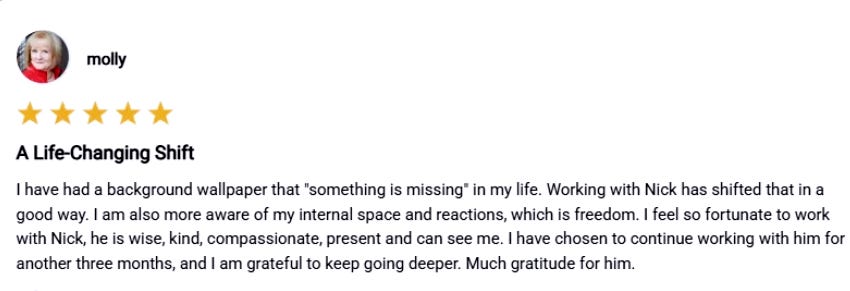
Another great post. Knowledge is not the same as experience. Stepping back and directly observing our minds, noting the impermanence and ephemeral nature of our thoughts and triggered feelings . . . that's a step toward real awareness, knowledge, and eventual change. That's how one can start avoiding being "roughly the same person you were five years ago. Same reactions, same patterns, same three in the morning". You're offering explanations and suggestions in such a simple, clear, and understandable way.
Sadhu. 🙏
You are so right Nick - the ever growing stack of completed books and a belief that the answers I’m searching for will be in the one I haven’t read yet. Lots of knowledge but no belief I’m heading in the right direction so I repeat the process over and over, improving my knowledge but not my practice. When I read your piece this week it was like you had a small window into my life , pointing out precisely what I’ve been doing for the past two years - I understand a lot intellectually but it doesn’t bridge the gap between knowing and seeing, something this weeks piece addresses head on. It’s a pleasant invitation to put the books down for a while and focus awareness on those states we can’t think our way out of and place our trust in the three trainings, to create an entirely different kind of knowing.
Many thanks for this last piece of the three trainings 🙏